
What Hotel Content Actually Drives Organic Traffic?
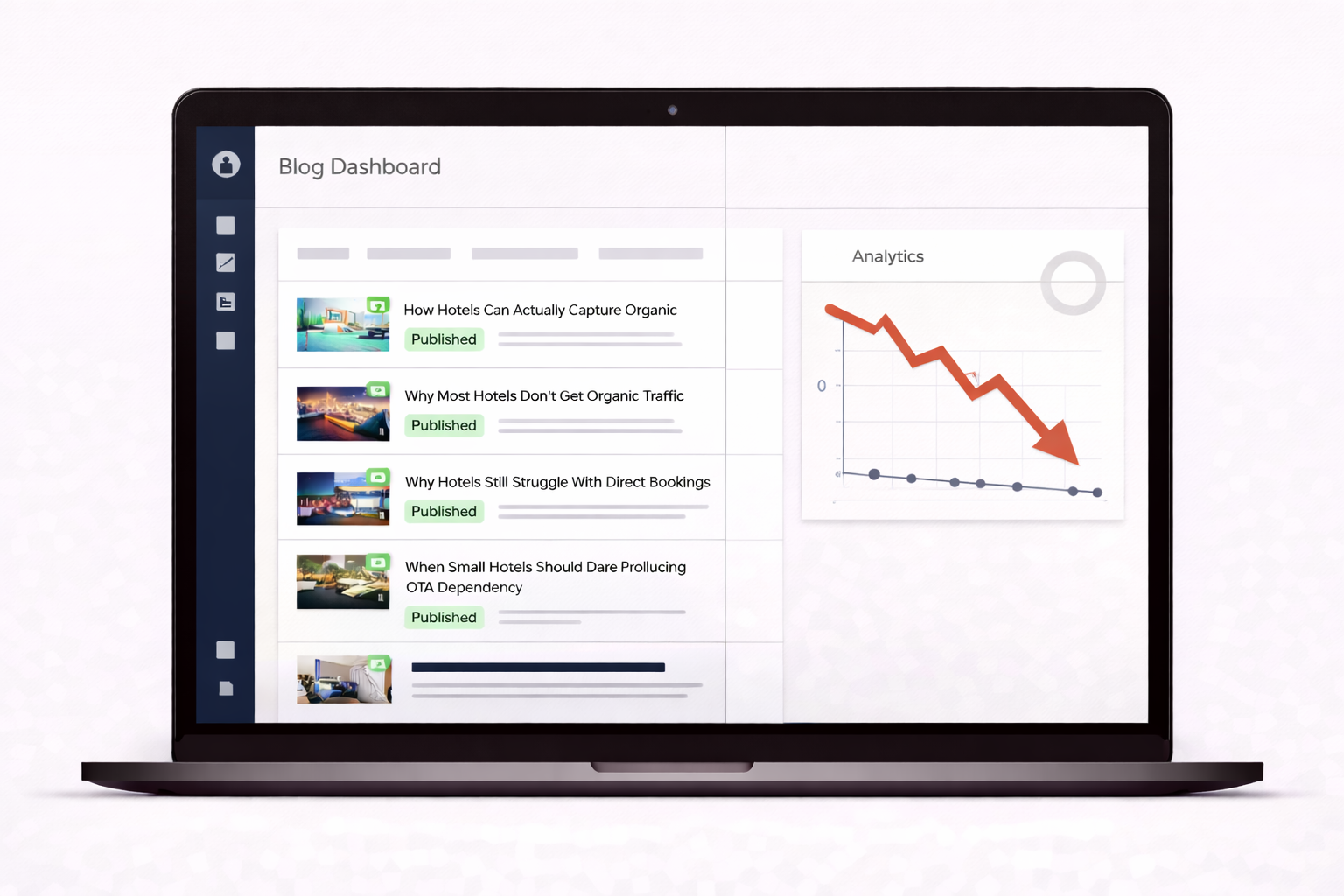
I’ve started noticing more hotels investing in content. Blogs are being published, destination articles are going live, and brand stories are being written. But most of it doesn’t actually drive traffic.
Not because content doesn’t work, but because it’s the wrong kind of content.
Hotels Are Writing, But Not Being Found
On paper, many hotels are doing content. They have blogs, landing pages, even SEO agencies involved. But when you look closer, most of what gets published falls into a few familiar categories.
Promotions disguised as blog posts. Brand stories that no one is actively searching for. Generic “things to do” content that has no clear search intent or differentiation.
The issue is not effort. It is perspective.
Most hotel content is created from an internal mindset. What do we want to say? What do we want to promote this month?
Organic traffic does not work that way. Search traffic is not created from what brands want to publish. It comes from what users are already looking for. And that mismatch is where most hotel blogs fail.
Traffic Comes From Search Behavior, Not Brand Content
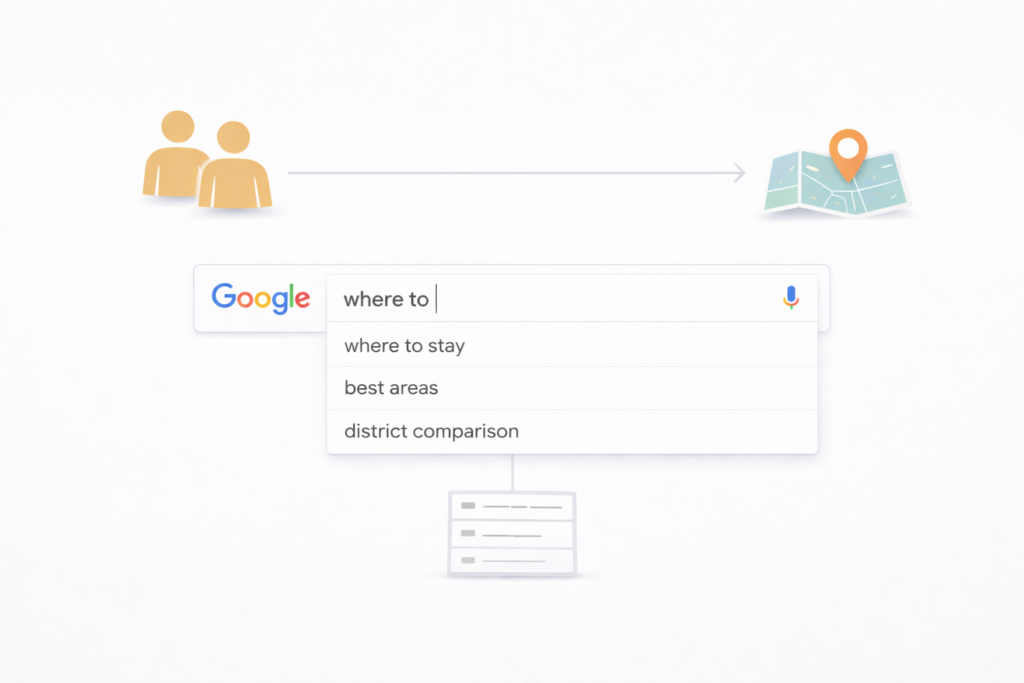
If you look at where organic traffic actually comes from in hospitality, the pattern is consistent across markets.
It rarely comes from brand-driven pages. It comes from how travelers actually search before choosing a hotel, with queries like:
- Where to stay in Ho Chi Minh City
- Best areas to stay in Bangkok
- District 1 vs District 3
- Best hotels for families in Da Nang
These are not queries about a specific hotel. They are part of the decision journey before a hotel is chosen. This is the key shift many hotels miss. SEO for hotels is not about ranking your brand name. It’s about understanding why many hotel SEO efforts fail to generate real traffic.
That is where content becomes a growth channel instead of just a branding exercise.
The 3 Types of Content That Actually Drive Traffic
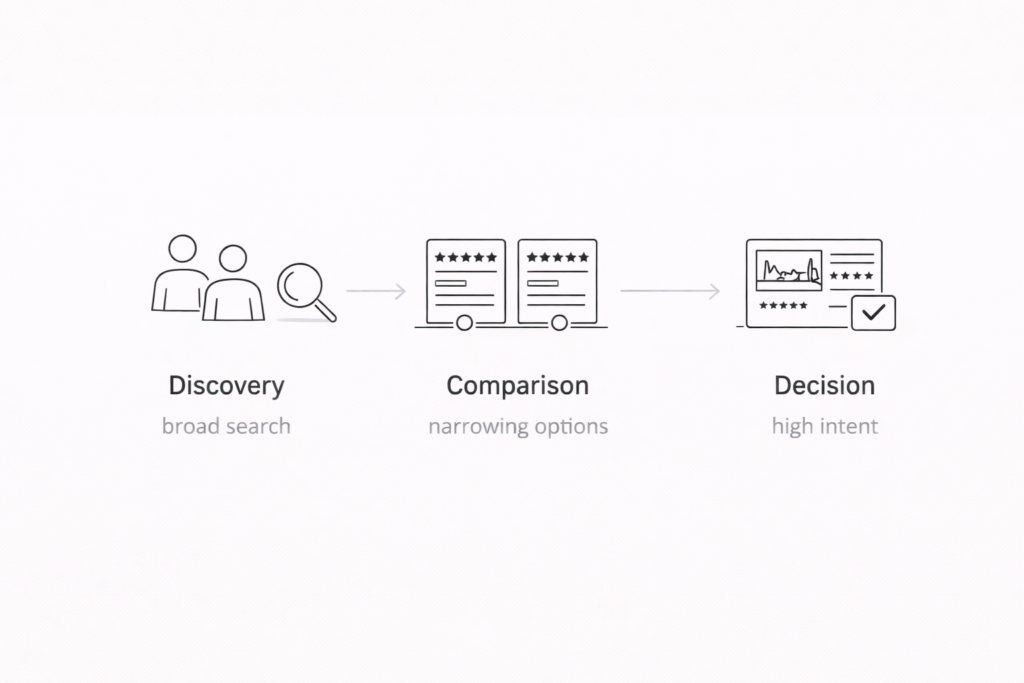
When you break down high-performing hotel content, it almost always falls into three categories. This is where structure starts to matter more than volume.
1. Discovery Content
This is where the user is still exploring the destination. They are not choosing a hotel yet. They are trying to understand where to stay.
Typical queries include where to stay in a city, best areas in a destination, or guides for first-time visitors. The role of this content is to frame the decision. It brings in broad traffic and introduces your hotel indirectly through location context.
Example topics hotels could create:
- Where to stay in Ho Chi Minh City for first-time visitors
- Best areas to stay in Da Nang near the beach
- Where to stay in Phu Quoc for different travel styles
Most hotels either skip this layer or produce very generic versions that do not rank.
2. Comparison Content
At this stage, users are narrowing down options. They are comparing areas, neighborhoods, or types of stay.
Typical queries include comparisons like District 1 vs District 3, best area for nightlife, or where to stay for a specific travel style. This type of content does something important. It filters the audience.
Example topics hotels could create:
- District 1 vs District 3: where should you stay in Ho Chi Minh City?
- Phu Quoc vs Nha Trang: which destination fits your travel style?
- Best areas in Hanoi for food vs sightseeing
Instead of attracting everyone, it attracts the right users whose preferences match your location or positioning. This is also where many hotels hesitate, because comparison content requires having a clear point of view.
3. Decision Content
This is where intent becomes highly specific. Users are actively looking for options that match their needs.
Typical queries include best boutique hotels in a city, best hotels for couples, or hotels near a specific landmark. This content sits closest to conversion. It brings in lower volume but much higher intent traffic.
Example topics hotels could create:
- Best boutique hotels in Ho Chi Minh City
- Best hotels in Da Nang for families
- Hotels near Ben Thanh market worth booking
At this stage, your hotel is not just providing information. It is competing directly for selection.
What This Means for Hotel Marketing
This is why many hotels feel like they are “doing content” but seeing no results.
They are publishing without mapping to search intent. They are creating content without understanding how demand is structured. And they are treating content as storytelling instead of acquisition.
This connects directly to a broader issue in hospitality marketing. Weak direct channels and heavy reliance on OTAs often come from not capturing demand early enough in the journey, why increasing direct bookings often feels harder than expected.
If your content does not exist at the discovery and comparison stages, you are forced to compete at the final stage, where OTAs dominate visibility.
Traffic Comes From Alignment, Not Volume
There is a common assumption that more content will lead to more traffic.
In reality, volume is rarely the limiting factor.
The real issue is alignment between what hotels publish and how users search. Traffic is not created by publishing more. It is created by matching search behavior. Until hotel content shifts from internal storytelling to external demand, most of it will continue to exist without being discovered.
That is the gap content strategy needs to close if it is expected to become a real growth lever in hospitality marketing .
FAQ
Content that aligns with search intent drives the most traffic. This typically includes destination-based queries such as where to stay, area guides, comparisons between neighborhoods, and curated lists like best hotels for specific needs.
Most hotel blogs focus on promotions, brand storytelling, or generic travel content. These topics usually have little to no search demand, so they do not attract organic traffic.
Both are important, but they serve different purposes. SEO content drives discovery and traffic, while brand content supports positioning and conversion. The problem is that many hotels only focus on brand content and ignore search-driven content.
It is not about the number of posts. A smaller number of well-structured articles targeting real search queries can outperform a large volume of unfocused content.
They cannot outcompete OTAs on brand or inventory, but they can compete earlier in the search journey. By capturing discovery and comparison searches, hotels can attract users before they enter OTA platforms.
From the Author
Thanks for reading Hospitality Insider ☺️

This site is basically where I try to make sense of hospitality marketing while working inside the industry. I’m not an expert, just someone curious enough to observe, analyze, and write things down.
If you have thoughts, different perspectives, or just want to talk about hospitality marketing, feel free to connect with me on LinkedIn.
Vee Nguyen
Founder, Hospitality Insider
If you enjoyed this article, a quick like would mean a lot 💙
Latest Insights
Observations and analysis on hospitality marketing, distribution, and growth.

Why Most Hotel Blogs Fail (Even When They’re Active)
May 10, 2026Publishing more content won’t fix your traffic. Here’s why most hotel blogs fail and how to align content with real search demand.
What Hotel Content Actually Drives Organic Traffic?
April 19, 2026This is why many hotels feel like they are “doing content” but seeing no results.

Can Hotels Really Generate Demand Without OTAs?
April 5, 2026Everyone talks about reducing OTA dependency, but from what I’ve seen, a lot of hotels aren’t even in a position to do that yet