
When Small Hotels Should Start Reducing OTA Dependency
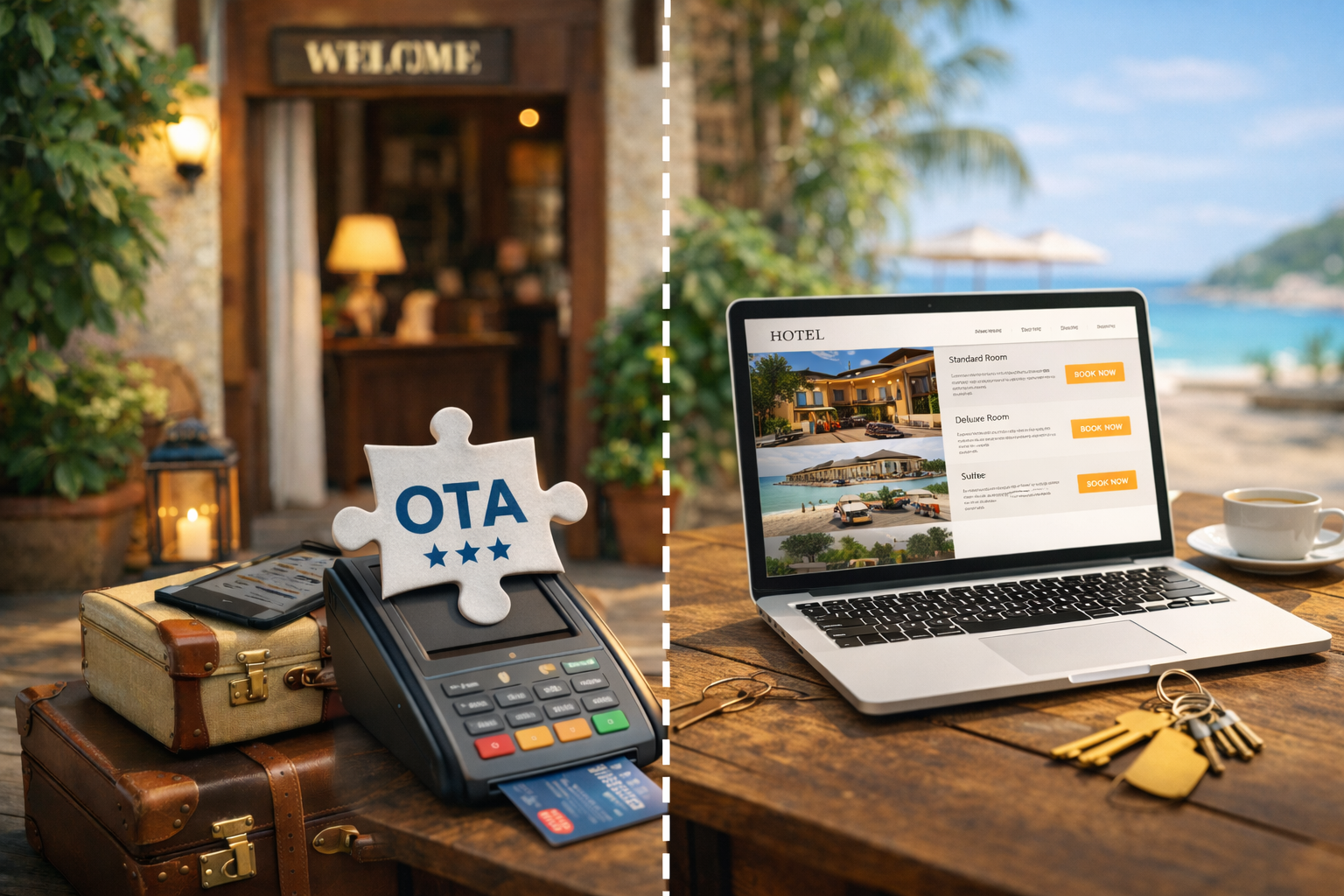
One conversation that keeps coming up whenever people talk about hotel marketing is the idea that independent hotels rely too much on OTAs.
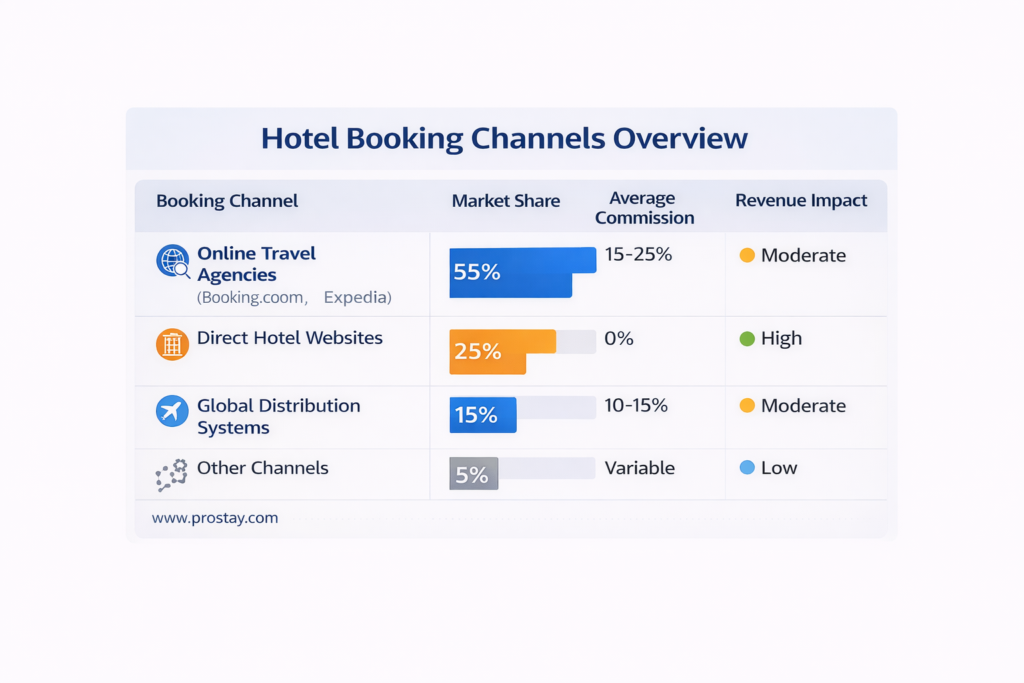
I hear this argument quite often, especially from hotel owners who start noticing how much commission they are paying every month. The logic seems straightforward. OTAs take between 15% and 25% per booking, and over time that adds up to a significant distribution cost.
But from what I have seen working in hospitality marketing, the situation is not as simple as saying hotels should avoid OTAs.
In fact, in the early stage of a hotel’s life, OTAs are often the most practical way to generate demand quickly.
The real issue appears later.
The problem is not that small hotels depend on OTAs in the beginning.
The real problem is that many hotels never build anything beyond them.
That difference is subtle, but it changes how we should think about distribution strategy.
OTAs solve the hardest problem for new hotels
When a hotel opens for the first time, it enters the market with almost no visibility.
Even if the property itself is beautiful and well designed, from a demand perspective it is essentially unknown. Travelers have never heard of it. There are no guest reviews yet. The website has no search visibility. And the hotel does not have any past guests who might return.
In other words, the hotel has supply but no demand engine.
This is exactly the gap that OTAs fill.
Platforms like Booking.com, Agoda, and Expedia already attract millions of travelers who are actively searching for accommodation. Once a hotel lists on these platforms, it immediately becomes visible to that existing audience.
For a new property, that visibility is incredibly valuable.
Instead of spending months trying to build awareness, the hotel can start receiving bookings within weeks.
Early stage hotels need occupancy more than margin
One mistake people make when discussing OTA commissions is looking at them purely as a cost.
In reality, new hotels are usually trying to solve a different problem. They need to stabilize occupancy.
If a property is running at 40% occupancy during its first year, the main challenge is filling empty rooms. Even after paying a 20 % commission, an OTA booking still generates revenue that helps cover fixed costs.
These include:
- Staff salaries
- Utilities
- Property maintenance
- Operating expenses
From that perspective, OTAs function almost like a demand acquisition channel.
And in many cases, they work remarkably well.
In several independent hotels I have worked with or analyzed, OTA bookings accounted for 60% to 80% of total reservations during the first two years.
That level of dependency may sound extreme, but it is actually quite common in the early stage.
When OTA dependency starts becoming expensive
Things begin to change once the hotel becomes more established.
From what I have observed, this usually happens after two to three years of operation. By that time the hotel has typically accumulated hundreds or even thousands of guest stays.
More importantly, the property has started building some level of market awareness.
At this stage several indicators often appear:
- The hotel has consistent online reviews on major platforms
- Average occupancy reaches 65 to 75 percent
- The property begins receiving repeat guests
Once these conditions exist, the economics of OTA commissions start to look very different.
Imagine a small hotel generating one million dollars in annual room revenue. If 70% of those bookings come from OTAs with a 20% commission, the hotel is paying around 140,000 dollars per year just in distribution costs.
For many independent properties, that number is larger than the entire marketing budget.
This is usually the moment when owners begin asking whether their distribution strategy needs to change.
OTAs are extremely effective at generating demand.
But if they remain the only demand source after several years, the hotel is essentially renting its customer base instead of building one.
Why many small hotels never build direct demand
One reason OTA dependency persists is that most independent hotels are primarily operational businesses.
Daily priorities often revolve around:
- Guest experience
- Housekeeping management
- Maintenance issues
- Staff scheduling
Compared with those responsibilities, marketing often receives less attention.
Because of this, I frequently see a similar pattern across many properties. The hotel website was created when the property opened and has barely changed since then. Search engine optimization was never considered. The hotel does not publish any destination content, and there is no system for communicating with past guests.
The website exists, but it does not generate meaningful demand.
As a result, OTAs continue to dominate the discovery phase of travel planning.
The point where marketing should start playing a role
Once a hotel has stabilized its operations, marketing can start shifting the distribution balance.
The goal is not to eliminate OTAs. In reality, OTAs will remain an important part of the distribution mix for most properties.
Instead, the goal is to gradually build additional demand channels.
In my experience, this process often begins with three areas.
1. Capture brand searches
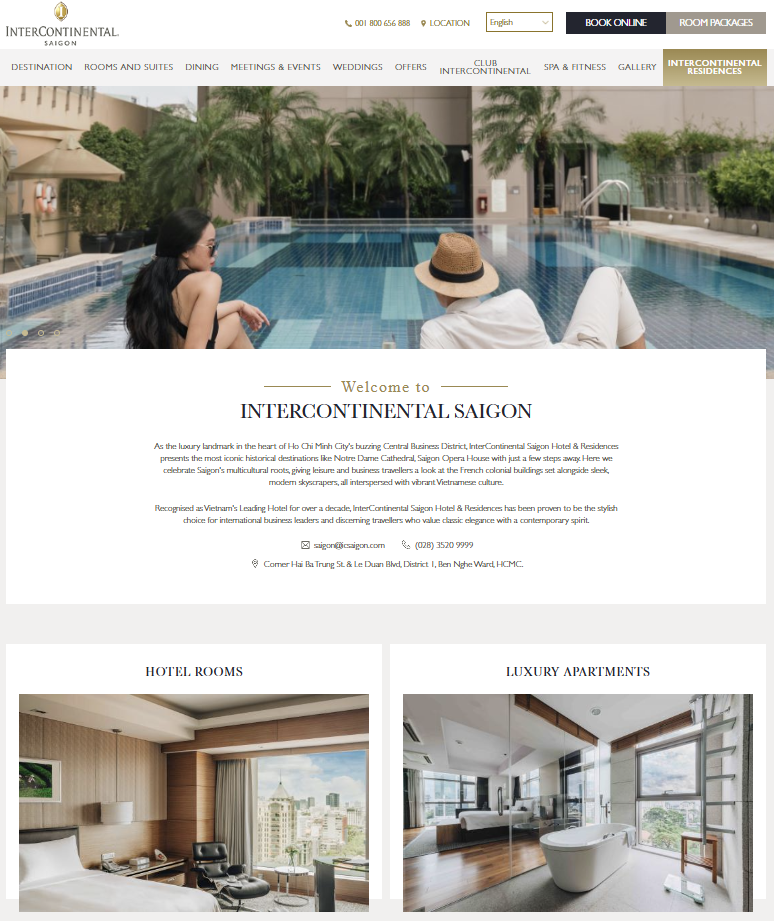
Travelers who already know the hotel name should ideally book directly through the website. Improving the booking experience and search visibility for the brand name can shift a portion of these reservations away from OTAs.
2. Participate in destination searches
Many travel searches begin with destination related queries rather than hotel names. Publishing helpful guides about neighborhoods, attractions, and travel planning can help the hotel appear earlier in the research process.
3. Build guest relationships
Direct bookings allow hotels to collect first party guest data and maintain communication with past visitors. Over time, repeat guests often become one of the most profitable sources of demand.
OTAs should become a partner, not the entire strategy
Looking at the industry from the perspective of hospitality marketing, the healthiest distribution model is usually a balanced one.
OTAs are extremely powerful for reaching travelers who have never heard of the hotel before. They provide visibility, credibility, and access to global demand.
But as a hotel grows, it should also begin developing channels that it owns.
These include:
- Brand search traffic
- Direct website bookings
- Repeat guests
- Email marketing
When these channels exist alongside OTAs, the hotel gains much more control over its long term growth.
OTAs help hotels enter the market.
Marketing helps hotels eventually stand on their own.
A shift in mindset for independent hotels
For many small hotels, the biggest transition is not technological but strategic.
In the beginning, the priority is simply selling rooms and stabilizing operations. OTAs are incredibly effective tools for achieving that goal.
But once the hotel becomes established, the challenge changes. The property is no longer just selling rooms for tonight or next week. It is gradually building a brand and a long term source of demand.
At that point, relying entirely on someone else’s platform becomes a limitation.
The hotels that grow strongest over time are usually the ones that understand this transition and begin building their own demand engines while OTAs continue to bring new travelers into the system.
From the Author
Thanks for reading Hospitality Insider ☺️

This site is basically where I try to make sense of hospitality marketing while working inside the industry. I’m not an expert, just someone curious enough to observe, analyze, and write things down.
If you have thoughts, different perspectives, or just want to talk about hospitality marketing, feel free to connect with me on LinkedIn.
Vee Nguyen
Founder, Hospitality Insider
If you enjoyed this article, a quick like would mean a lot 💙
Latest Insights
Observations and analysis on hospitality marketing, distribution, and growth.

Why Most Hotel Blogs Fail (Even When They’re Active)
May 10, 2026Publishing more content won’t fix your traffic. Here’s why most hotel blogs fail and how to align content with real search demand.
What Hotel Content Actually Drives Organic Traffic?
April 19, 2026This is why many hotels feel like they are “doing content” but seeing no results.

Can Hotels Really Generate Demand Without OTAs?
April 5, 2026Everyone talks about reducing OTA dependency, but from what I’ve seen, a lot of hotels aren’t even in a position to do that yet